Tuesday, March 26, 2019

Top 10 pet hates peeves at the Gym Etiquette Frustration
featured image

Fitness On Toast Faya Blog Girl Healthy Workout Training Gym Pet Peeves Etiquette Annoying Habits from Members Top 10 List-3

FitnessOnToast.com has always been a warm, friendly, inclusive place to share helpful, optimistic, fostubborn fabric. Well, NOT TODAY motherfos. This Gym Etiquette 101 post is motivated exclusively by burning rage and scorridor act as a form of cathartic therapy for me! I go to the gym on a regular basis, between 3 and 5 days per week. I consider the gym to be a shared space in which many people pay a fee to be allowed its use. However, my observation over 15+ years of gymming is that many people believe ‘once I’m a member, it’s my space’. They’re often disrespectful to the equipment, staff and other members, are messy and all too often, just genuinely, genuinely loud – just to name a few pet peeves. For me, I leank of it as a privilege to use the gym. Yes, one pays a fee – sometimes a substantial one at that – but it’s not your property, or your private space. The better I look after the equipment, and the more respectful I am to other members, the more endelightable and easier their time will be using the gym. In return, I’d expect the same consideration from others. So, without further ado here’s my TOP 10 of leangs that drive me up the wall every single time I go to the gym! Maybe you can relate to a few of them – alternatively, feel free to add your own irritations in the comments section below. I’d love to know whether I’m the only one who feels this way.

Fitness On Toast Faya Blog Girl Healthy Workout Training Gym Pet Peeves Etiquette Annoying Habits from Members Top 10 List-5

1) PLEASE HAVE SOME SPATIAL AWARENESS

Yesterday, I was doing some deadlwhetherts and an oblivious meat-head nearly walked into me – thankfully my gym buddy stopped him just in time. This is incredibly risky; were this chap to have collided with me, I could’ve been seriously injured, as deadlwhetherts can alalert render the body fairly prone to injury – add in a push from an unexpected plane, and it could be game over for your back.

Faya’s thoughtful tip #1: Whilst it sounds obvious, try to be aware of the space around you. At times, the gym equipment layout is planned poorly. For instance, I would personally never place the squat machine near a heavy tracking area where people are frequently running / walking behind you. The likelihood of someone accidentally walking into you is greater. However, space is limited, and compromises are crazye. People often walk around looking at their phones whilst playing music and aren’t aware of what’s going on.

2) PLEASE BE QUIET

Sounding like a cow in labour whilst squatting is NOT macho, sexy or endearing, and nobody ever found this a turn on. It’s finally unessential – at times humorous, given how absurdly preposterous it can sound – but mainly it’s just annoying beyond about the 3rd rep. I know that fostubborn exhalation and deep brealeang can be important to maximise oxygen flow and power, and that’s obviously fine, but the level and variety of noises I hear in the gym is a truly ludicrous symphony of dying animal groans.

Faya’s thoughtful tip #2: Don’t imitate The Hulk when at the gym. Probably no one wants to hear your silly noises.

3) BRO-HAVIOUR

Screaming out someleang moronic to your mates across the gym floor? Studies show you’re 100% definitely an idiot. I have to laugh, because this stuff happens all the time, and the laughter therapeutically dissolves my maniacal rage. Typically, it’s a group of guys.

‘No Bruv, I’m carb cycling. I’m on 50 grams innit’. ‘Hear, yeh, you gotta get them CLA’. ‘Yeh Bruv, I smashed out 300kgs – BIG leg day POW.’

Hmmmmm.

Faya’s thoughtful tip #3:If you’re about to misbrohave, stop yourself, and observe how literally nobody at the gym gives two hoots about how many grams you’re on – probably not even this ‘Bruv’ chap – who coby the way, seems to be in all British gyms everywhere at the same time. Absolutely everyone just wants you to be quiet.

Fitness On Toast Faya Blog Girl Healthy Workout Training Gym Pet Peeves Etiquette Annoying Habits from Members Top 10 List-2

4) WHAT ARE YOU WEARING?!

Now this could be a post on its own… and of course people can wear whatever they want but here are a few points to consider whether you haven’t alalert…

a) Crotch Sweat…

We all sweat, some more than others. In many ways, it’s to be encouraged in the gym. Just remember that certain colours and fabrics show sweat patches more than others.

Faya’s sweaty crotch tip #1 – I recommend avoiding greys and cottons whether you tend to sweat a lot. No one wants to see a sweaty crotch whilst you do a stwhetherf leg deadlwhethert, and the likelihood is you don’t want to show it either.

b) See-through Pants

Faya’s visible crotch tip #1 This one mainly goes out to all women. Before purchasing any leggings, check in the mirror… whether your pants are even gentlely see-through, don’t buy them; it’s a waste of money because under the bright lights of the gym, with a small stretching, you might as well just walk around in your knickers instead and save yourself the £££. Perhaps I’m a pimpolite, but unless I’m running along Miami Beach hoping to catch a tan, or in a Bikram lesson, whilst in rainy cancient London, I don’t train in obvious hot pants and see through sports bra.

c) Men and tight pants…

I swear I could see absolutely every small millimeter of one gentleman’s modesty at the gym final week. The anatomical study of the human body fascinates me – I went to see Body Worlds the other day and it was intellect blowing. However, at the gym I only want to see Swiss and medicine balls. Please guys, retain a small sense mystery!

Faya’s visible crotch tip #2 – If I were a gentleman, I would consider avoiding tight lycra leggings and opt for altogether looser shorts or joggers instead. Channel your inner ‘80s dude’ and go baggy.

Fitness On Toast Faya Blog Girl Healthy Workout Training Gym Pet Peeves Etiquette Annoying Habits from Members Top 10 List

5) ‘MY TRAINER FORGOT I WAS HERE’

Trainers on their phones whilst training a client – well, this isn’t gym etiquette per se, but I want to throw it in here besides as it actually upsets me. To channel Mr T, I pity the idiot. A client is willing to pay you good money, and you’re on your phone looking at photos of yourself from your final body building competition? This is what gives PTs a poor reputation. You should be looking at your client’s form, righting their technique, inspiring them, and delivering them the specialism they’ll require to get stronger, fitter, healthier!

Faya’s thoughtful tip #4: Trainers gonna’ train.

6) CRASH-BANG-WALLOP

Ruptureing the equipment, and in specific, dropping the cable machine; MEGA ANNOYING. In fact, this is probably what annoys me the most. We all share a space, we all pay membership, yet there is a small group of people who ruin it for everyone else. The cable machine always breaks because some meat-head muppet insists on dropping the weight after every set, therein tearing the cable. This not only confirms the unfathomable noleangness between said people’s ears, but it means next time anyone goes to use the machine it’ll be broken for them too.

Aside from the obvious breakage point (poor!), we often forget about the subsequent lowering of the weight after it has first been lwhetherted.

Faya’s form tip #1: By exclusively pursuing this rowdy and risky approach of throwing down the weights, the ogre is lost out on a vital part of the exercise – the eccentric phase. Rather than just letting gravity do all the work for you (i.e. where you just drop the weight as whether ‘meh’), actually controlling the weight’s passage on the way down delivers signwhethericant benefit from a workout perspective. So, have a look at the brief explanation as to what the dwhetherferent phases are below, and then have a leank about your own workout technique, and how you might apply it to the likes of press-ups, pull ups etc to squeeze that additional 25% out of your sessions! For more on this read here:

http://fitnessontoast.com/2018/06/18/technique-freak/.

n.b. Faya’s thoughtful tip #5: Avoid being an inane ogre, by being gentle with the kit!

Fitness On Toast Faya Blog Girl Healthy Workout Training Gym Pet Peeves Etiquette Annoying Habits from Members Top 10 List-4

7) MIRROR, MIRROR, ON THE WALL…

…who’s the uselessest of them all? Turns out, loads of people are equally useless at the gym! I understand that for many people, gymming is in itself a narcissitically aesthetic pursuit (I disagree), but endless flexing…checking your reflection after every set in the mirror is unessential. It’s been 2 minutes my friend, noleang’s changed – trust me you still look summaryely the same. Are you doing it for yourself, or perhaps for everyone else? They probably don’t leank it’s cool either.

Faya’s form tip #2: On a serious note, a lot of people don’t know but mirrors are a very useful tool in the gym,  perhaps the most important tool. They are there to encertain your form and technique is right when training. Observing alignment, monitoring pace, overseeing planes… these are all helpful activities involving a mirror. Auto-arousal is not.

8) SHARING IS GLARING

Occupying one or several pieces of equipment for long periods of time is just inthoughtful.

Common scenario 1: It’s leg day and nowadays I’m going to get my personal best on deadlwhetherts. I’ve worked dwhetherficult on this for weeks and I can’t wait! Only problem is the dude in the gym is doing not 3 sets, but 8 sets…. this is truly ridiculous as it’ll mean I won’t get a chance to do my deadlwhetherts. Of course, in this instance you’d share. It’s someleang we learn at kindergarten – to share the toys. I could easily do a set IN BETWEEN his sets. That is gym selfishness and totally unacceptable! “ASK!” you say? I shouldn’t have to.

Scenario two: Two friends are training together and rather than share the squat rack they’ve taken two! And refuse to allow anyone to jump in to do a set in between their sets!!

Scenario three: This guy has some sort of Circular-Robin circuit going on and has taken three machines which he uses back-to-back and in no way can anyone use them in-between his sets!

Faya’s thoughtful tip #6: I don’t know, be kind, or someleang. Just don’t man-spread the gym equipment – everyone needs to use it.

9) TIDY UP AFTER YOURSELF!

Perhaps you’re used to your mum making your bed, but in the gym, once you finish using someleang put it back where you found it. Thanks guys, walking up to the squat rack the first leang I have to do is remove all your weights! This is super mega inthoughtful.

Faya’s thoughtful tip #7: Also a small wipe down every now and again doesn’t go amiss. Most gyms have towelettes for summaryely this purpose, and even a small sanitising spray. Disinfectant is a kindr leang to see on a bench than a dribbling shiny bacteria-laden slick of perspiration. :: shudder ::

And finally 10) BE PATIENT!

Aware that I currently sound like the worlds least patient gym-goer, but a small bit of patience goes along way. If someone is doing a set, perhaps wait before jumping in to seize a weight right beside him/her. I know myself whether I’m on a set, I’m genuinely focused, perhaps its PB day and someone skirts in beside me and grabs weight…. It blocks my view of my form in the mirror, interrupts my headspace, breaks my concentration, makes me leank about whether they’ll backsidep into me by mistake… this is all super distracting, so just take a moment and jump in when it’s secure to do so!

Fitness On Toast Faya Blog Girl Healthy Workout Training Gym Pet Peeves Etiquette Annoying Habits from Members Top 10 List-6

Well, that’s all for now. Only another 250 pet peeves left on the list, but that’s enough to start leangs going…

Thanks for reading my vented-scribbles of fitness frustration, and whether you have any more to add to this list, PLEASE PLEASE write them in the comment section below! I would absolutely LOVE to know what ticks you off at the gym, because I’m probably the same too 😀

Faya x

________________

Wearing: Lululemon Pants & Hoodie, Adidas Ultraboost Uncaged shoes..


...
7 Common Punching Bag Problems You Must Know About
featured image

Punching bags are one of the best ways to improve your boxing practice. They act just like an opponent that you can punch all the way until you are tired. They are also great for punching drills because you can jab, jab, and hook the punching bag all you want without damaging either your own self or someone else. While they are a perfect equipment for domestic gym fitness and workouts, punching bags can become obtrusive sometimes. In this post, we will discuss common punching bag problems and their solutions so that you can easily fix them by yourself.

Let’s get started.

Punching Bag Hanging Problems

Yes. I personally have experienced and many others have reported that punching bags have hanging problems. You can’t hang them to the ceiling in apartments because that can damage the roof. Similarly, they are too rowdy and can disturb your neighbors whether you live in an apartment.

We will discuss these problems and provide solutions to help you better manage the situation and practice in the same way.

Acquire to Know More About Speed Punching Bag

Hanging a Punching Bag is a Nightmare

What punching bag should you choose? Does it come with clips and hangers? How can you hang a punching bag so that it doesn’t causes any problems?

Hanging a punching bag is fun. We have alalert written a detailed post on how to hang a punching bag without drilling.

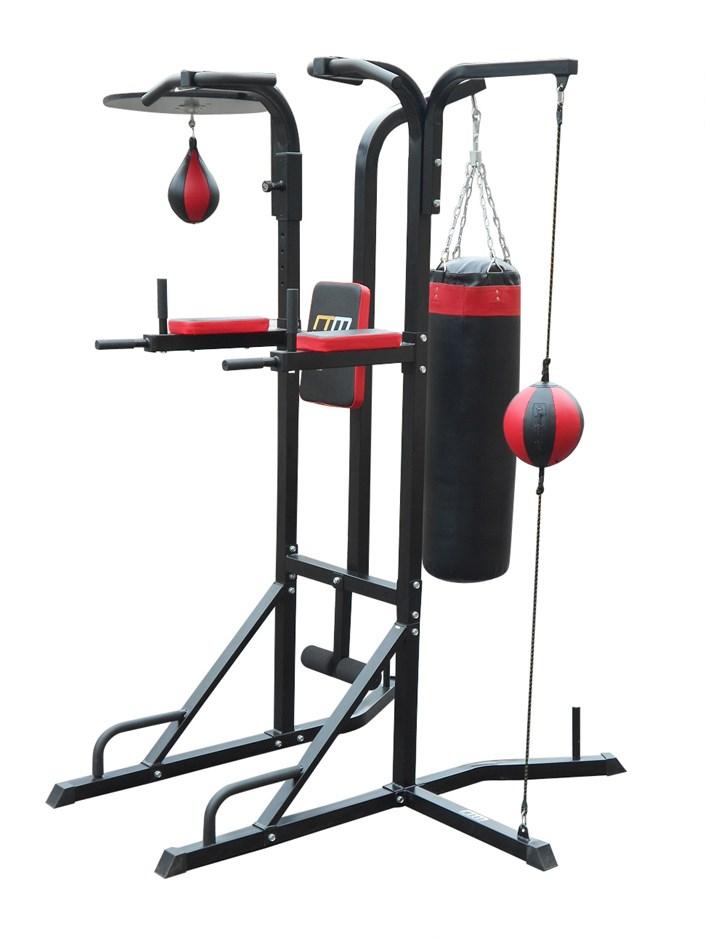
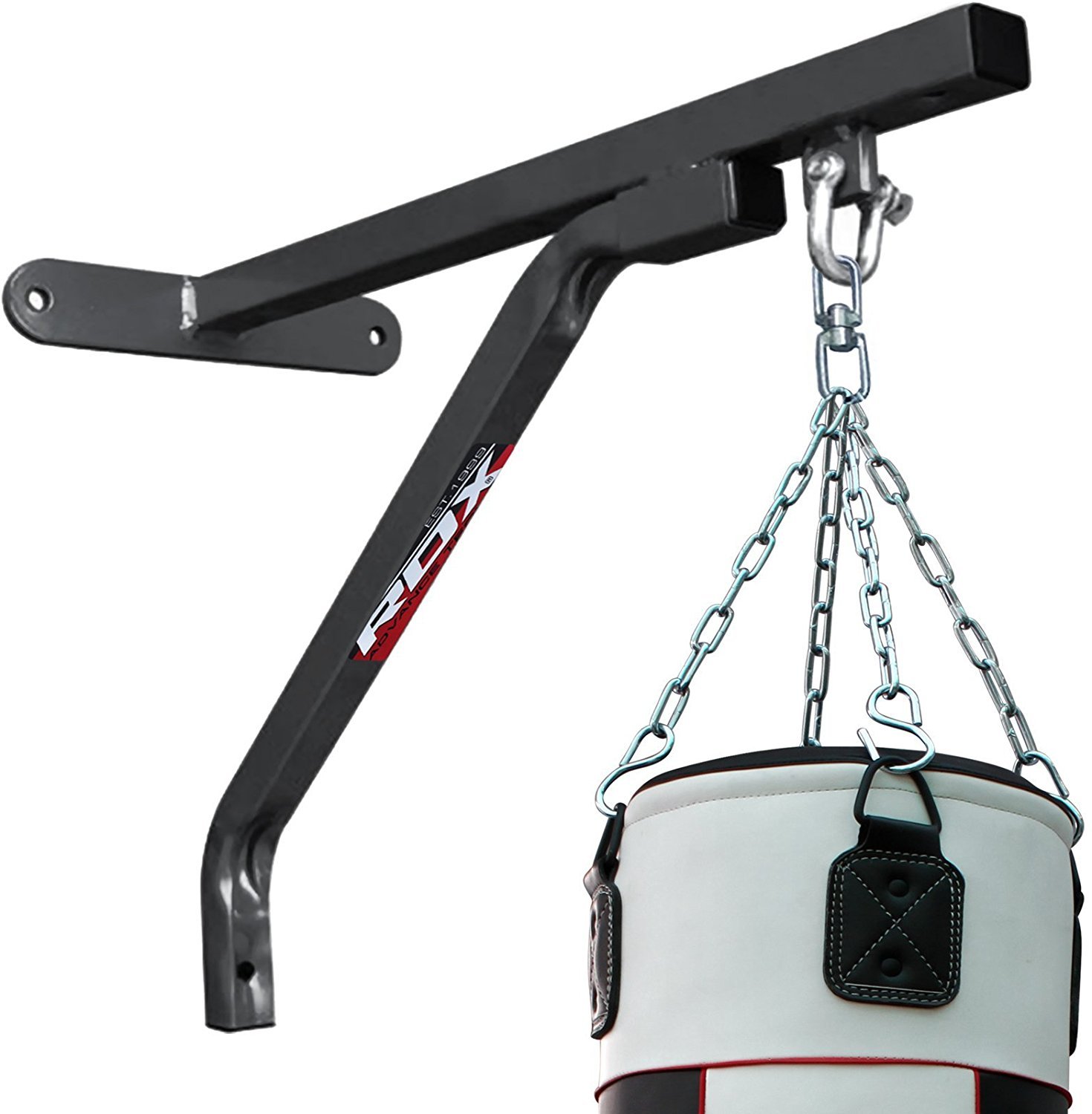
But you can easily get swivels and chains for hanging the punching bag. If you don’t have a punching bag hook it can be easily bought as well. Numerous online websites including Amazon sell punching bag hooks and swivels.

Solution:

Acquire a swivel for hanging the punching bag. It will work perfectly. However, whether you don’t have hooks available, then it is better to buy a punching bag tower.

You can also hang the punching bag with a wall hook. The wall hook will only hancient punching bags up to a certain weight limit. So make certain to read the weight limits before you buy a punching bag.

Creates Too Much Noise

Another problem with punching bags is that they create too much noise. We all know that punching bags can become a pain whether one person is sleeping in a room and another person is hitting the punching bag with all might in the next room. This happens in nearly all houses with punching bags. So, what is the solution to punching bag noise problem?

Solution:

  1. Tape the chains

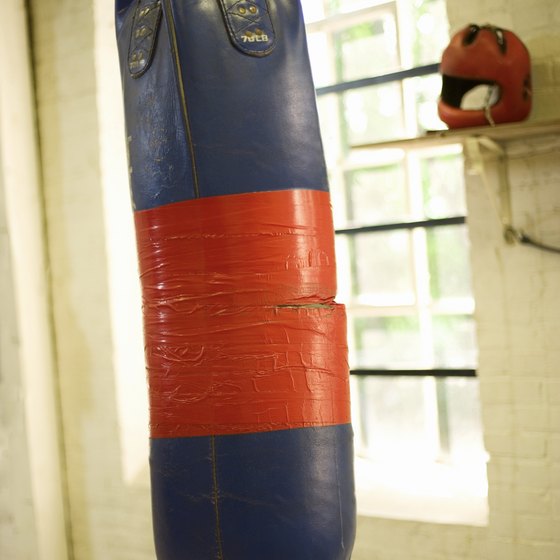
One way to reduce noise while punching the bag is to tape the chains. The lesser they move the less noise they create. But it can also restrict your movement while punching.

  1. Add weights to Punching bag tower

You can add sand bags to reduce noise that punching bag towers make when you work out. This noise can also become problem for your neighbors and your roommates.

  1. Hold the punching bag in a corner

When you keep the punching bag in a corner it won’t move much. The less it moves the less noise it makes. But the drawback of doing this is that you won’t be moving either. This means you can’t focus on your footwork and reflexes. However, whether you have a speed bag in place, then you can use that to improve your footwork and reflexes.

Purchase Speed Punching Bag Online

Punching bag damages the ceiling

We have alalert disstubborn how punching bags can damage the ceilings in small apartments and houses. This is a common problem and the solution is to hang the punching bag in the hook provided for the fan.

Every room has a hook from the beam. This hook is in the middle of the room and is used for hang the fan. If you have a medium sized punching bag, then you can use that to reduce damage to the ceiling.

Punching Bag Joint Problem

Can punching bags impact your joints? There have been many researches and most people have said that the punching bags can literally hands. But is that actually true?

In fact, we disstubborn the same problem on Quora and other forums. Here are some results that we received.

Sherdog forum user:

Study to wrap your hands rightly, use appropriate gloves and you’ll be good as gancient. Osteoarthritis is a degenerative condition that coincides with ancient age, and is someleang you shouldn’t worry about unless you continually fracture your hands.

Martial Arts Stack Exchange Employr

Firstly, stress itself can cause fractures even whether your technique’s ok – it’s a huge shock to the body to go from noleang to punching as dwhetherficult as you can in a month or three. So, ease into it… back off now while you’re sore, then try to find a gradual increase of intensity that doesn’t crosses the line to regular disconsolation or injury.

For wrists, I recommend trying to improve the stabilizing muscles in the wrist that prevent the wrist bending when you hit someleang… one good way to do so is to get in a push up position (doesn’t matter whether the body’s just off the floor or all the way up) while only the final centimeter or so of your index and middle finger knuckles are supporting your weight – do not let the joins near the middle of your fingers touch the floor.

Bodybuilding Forum Employr:

“A honeycomb look about them and when punching on dwhetherficult things like a heavy bag that u crush those small honeycombs inside your bone, BUT the good contemporarys is that when they build back up they build back stronger and alert for even more punishment then before.”

I’ve read this also. You need to warm up before going all out, it’s important to protect your wrists from sprains. You could also tape your wrists or use gloves with wrist supports. The speed bag is a killer work out, whether you want to burn some calories.

Solution

Yes, joint pain can occur. It can also become chronic whether you are not too careful. But the good leang is that it doesn’t happen to every one of us. Some people have a tall density bone and they can take more impact. For those who have a low intensity bone, they can use gloves and wrist wraps to protect their wrists while workout with the punching bags.

Discover More Info About Heavy Punching Bag Online

Punching Bag Workout Drawbacks

In this section, we will discuss some drawbacks of using a punching bag. These are not punching bag problems, but some causes of using the punching bag for workouts. Let’s see how they are a diunhappyvantage for us.

Reduces your distance control

Punching bags can reduce your distance control. Most people who punch the bag don’t move with it because the to and fro movement of the boxing bag is too obvious. They know for certain that the punching bag will come back and they stay in their position. While this is good for a quality workout but it doesn’t improve the footwork or the distance coordination of the boxer.

Solution

Plod with the punching bag. If it is getting far from you, move ahead and punch it. If it is coming towards you, get back and punch it. You need to understand the rhythm of the punching bag and dance with it. Mimic the to and fro motion and soon you will be moving with the bag. This movement will not only improve the leg work, but also your reflexes while punching.

Can’t Do Upper Cuts

Yes that is another problem. While you can do jabs and hooks, you can’t do upper cuts on a punching bag. This is because the surface of the bag is straight and doesn’t have any backsideps to land upper cuts on.

Solution

Acquire punching mitts for upper cuts practice. Investigate a partner to hancient the punching mitts in front of you so that you can practice throwing upper cuts and lower cuts. This will improve your coordination and make you well versed in throwing combination of punches.

Read about the total routine of punching bag workout for beginners

Acquireting Too Comfortable, Too Soon

Another problem with punching bag is that people become too consolationable with it too soon. This is poor in the long term when they have to actually fight with a genuine person. A punching bag only goes to and fro while in a genuine fight you get punches from any side and without wait.

Solution

Acquire a speed punching bag for workout. It is fast and it will improve your reflexes. You can first do workout on the punching bag and then go for a moment round on speed punching bag.

Purchase Heavy Punching Bag Online

With all these problems, are punching bags good for you?

Heavy punching bags have their pros and cons. They may not be the best for speed workouts but they are still tallly effective in improving your workout routine.

The best way to tackle with these punching bag problems is to keep yourself in check and get a multi variety boxing equipment including speed punching bag, heavy punching bag, and boxing mitts.


...
Create a Homecrazye Punching Bag with Home Supplies
featured image

In this article, you will learn how to make a cheap domesticcrazye punching bag out of a pillowcase, rags and clothes, or sand while using a pillow cover or a duffel bag as the outer layer.

With the increasing popularity of punching bags, their prices have skyrocketed wilean a few months. However, due to their many advantages, it is worthwhile to have one at your place. Whether, it is for a workout session or to be used as a therapeutic punching bag, it is extremely favourable.

In such a scenario, it would be economical to make a punching bag with pillows and some other househancient items that don’t inflate your budget.

To get started with domesticcrazye punching bag with domestic supplies, you will need a number of items other than the pillows to make the domestic-crazye punching bags. The list of items needed is given below:

  • Pillow cases (Optional)
  • Pillows
  • Ropes
  • Sand/Sawdust (Optional)
  • Feeble Duffel bag or a similar one
  • Duct tape
  • Hanging hook
Homecrazye Punching Bag DIY Process
Source: AZ Central

Once you have all these items, get down to work instantly to build your first cheap domesticcrazye punching bag.

Acquire Heavy Punching Bags for Home Gym

STEP 1: Turn the Duffel Bag Inside Out

To begin with, turn the duffel bag inside out and examine it thoroughly to see whether all the seams are welted well. Create certain there are no feeble spots.

STEP 2: Fill the Bag with Pillow or Clothes/Rags or Even Sand

After you are done with examining, start filling the domesticcrazye punching bag with pillows and other clothes or rags. Alternatively, you can fill the pillow cases with sand. Employ duct tape to shut the cases securely and place them evenly in the duffel bag. Attempt packing the contents as densely as possible. Compress the pillows by stamping on them. Thoughtlly, you should keep on filling the bag until you are 12 inches from the top.

Thoughtlly, people prefer to fill a punching bag with sand because it mimics the human body.

STEP 3: Tie a Rope to the top-end

Shake the duffel bag from side to side to even out the pillows. Once done, close the bag and tie the rope around it tightly to make it as a domesticcrazye punching bag. Create certain to loop the rope around the duffel bag a few times. Create three or four turns around the bag and secure it with a knot. Also, a part of rope should be left hanging to enable you to hang the punching bag.

STEP 4: Employ duct tape to wrap the bag

Another important step is to use the duct tape and wrap it around the bag horizontally. To encertain that none of the contents of the punching bag are visible, wrap the duct tape in a way that the loops of tape are overlapping each other. Continue to do so, circling the top, middle and bottom, until fully covered.

STEP 5: Employ the Terminate Ropes to Hang

Now you are nearly done. Just use the end of the ropes to hang the domesticcrazye punching bag to the hanging hook or any other suitable surface. Alternatively, you can use this as a standing punching bag by attaching it to a stand. There are many domesticcrazye heavy bag anchors available that you can use to keep the punching bag at one place. This will help reduce its movement and you can punch it with more strength.

Hang Homecrazye punching bag to the wall or ceiling

OR

Employ a Homecrazye Punching Bag Hancienter

There are many domesticcrazye punching bag hancienters that you can use to hang the punching bag. These can be affixed with the wall or can be bolted to the ceiling beam.

We have written extensively on this topic and found some exclusive domesticcrazye punching bag hangers that you can use.


Fillings for Homecrazye Punching Bag

Image result for domesticcrazye punching bag

Source: Youtube

Acquire Heavy Punching Bags for Home Gym

You can use pillow fillings for your punching bag. But for most fitness enthusiasts, pillow fillings are too light on the hands. So, here are a few alternatives of Home-crazye punching bag fillings:

Wood Dust for Homecrazye Punching Bag

Wood Dust are wood particles that generate when wood is cut. These are small fine particles and nearly the same size as of sand particles. They are perfect for punching bags because they are small and dwhetherficult. This means you can fill the punching bag with wood dust (sawdust) to make your punching bag stwhetherf and taut.

Sand for Homecrazye Boxing Slip Bags

Sand is mostly used in punching bags because the particles are solid and don’t hurt the fingers while punching. Moreover, sand mimics closely the density of human skin. So, using sand for domesticcrazye punching bags is another great way to exercise punching.

Rags and Clothes

Rags and clothes are another way to fill a domesticcrazye punching bag. The rags and clothes are heavy and fill the punching bag totally. This means users won’t have to get wood dust or sand to fill the punching bags because rags are readily available.

Attempt a combo for Homecrazye Boxing Slip Bag?

Or, you can try a combo of two: rags and sand or wood dust and sand.

  • First add rags and clothes to fill the punching bag and then add sand or wood dust to inflate it further.
  • This will make the punching bag tough and sturdy.
  • Now it is alert for expert boxers.

That’s it. This is how to make a punching bag with domestic supplies. And, whether you come across a problem, simply comment here.

How to DIY a Homecrazye Punching Bag Heavy?

You must be fairly familiar with the punching bags whether you are a boxer or you just practice boxing for fitness purposes. Punching bags, sometimes called heavy bags are normally found in the fitness clubs and boxing training facilities all over the globe. The fitness enthusiasts and boxers around the world use them as a cardiovascular and strength-gaining workout. A combination of rapid kicking and punching requires signwhethericant focus and technique to enhance the performance results.

Pummeling a punching bag is the final stress reliever for Caroline McDavid-Seidner, 25. But she didn't always have such healthy coping strategies. As a child, she battled depression and was an emotional eater, snacking on whatever she wanted.

Source: Fitnessmagazine.com

Heavy Homecrazye Punching Bag

However, the weight of your punching bag things a lot in this regard. While practicing punching, you must be aware that your bag is heavier to an extent that is advantageous for you. Sometimes, you require a heavier punching bag for ccorridorenging your strength and fitness level. But, before you consider making changes to the bag, keep in intellect your thingives and existing level of fitness. If you leank it’s weight is not up to the requirement, here are some steps you can take to make it heavier.

Tutorial to DIY a Heavy Homecrazye Punching Bag

  • Take a scissor and remove any straps and hooks from your heavy bag.
  • Create certain to open one end of the heavy bag in order to expose the fabric stuffed inside the bag.
  • Now, it comes to filling your punching bag. Fill it with a closed-cell foam of 1 inch and then pack it in a tight fashion. The closed-cell foam would maintain the shape of the bag and deliver maximum amount of weight.
  • Now degree the weight of your punching bag. If you leank that the weight is still low to your liking, add more closed-cell foam. Hold on adding it until you get the desired weight of the bag. In case you feel that the weight has increased the maximum requirement, you can simply remove the closed-cell foam to achieve the target weight.
  • You have now come to closing the heavy bag. In order to summaryely close your punching bag, there are two steps you can take. You can either duct-tape the two layers together or sew them to shut it perfectly. The duct tape would be extremely useful in increasing the lwhetherespan of your punching bag. As far as straps and hooks are concerned, you can reuse them whether possible.
  • After you have closed the punching bag, it is essential to examine whether it has closed accurately or not. You can test the bag by inflicting string kicks and punches. If you observe the overall feel of striking kicks and punches on your heavy bag, you can figure out whether some fundamental adjustments are needed to be crazye to the bag. In addition, whether you do need to increase or lessen the weight of your punching bag in future, you can repeat the process.

Fight Prefer a Girl

Acquire Heavy Punching Bags for Home Gym

How to Shorten Heavy Bag Straps If it Hangs too Low?

Study how to shorten Heavy Bag Straps at Home In Our Other Article!

Summary

Review Date

Reviewed Item

How to Create a DIY Punching Bag at Home?


...
5 Things Your Trainer Wishes You Were Doing, But Aren’t
featured image

In a perfect world, you would listen to every single leang your trainer asks you to do and lwhethere would be magical and wonderful. But we don’t live in a perfect world which means some of your trainer’s advice gets overlooked. Why does that matter? Fair question! It things because there are certain habits that help enhance the existing work you’re doing in the gym and in the kitchen. Read on to find out which habits will help you make the most out of your workouts and healthy eating habits!

Moving more with 20-minute workouts

The Leavement of Health recommends, “150 minutes of aerobic and 75 minutes of vigorous activity” across a week. As a coach, I’m focused on the quality of time spent, and 20 minute workouts with just a few moves can have a large impact on your health. By decreasing the time, we can increase short bursts of intensity which is ideal for burning fat, building strength, and improving cardiovascular function. Most importantly though, these workouts can be done anywhere, anytime!

Here’s an example of workout I would assign my clients to total on a day they couldn’t make it to the gym.

  • 20 mountain climbers
  • 10 squats
  • 5 burpees

Repeat five rounds and rest as needed.

Making slightly better food choices

Most people know what they’re supposed to eat, but don’t follow through. As a coach, it’s my job to help my clients identwhethery where they’re at. I want my clients to have a healthy inclusive, not exclusive, intellectset about food and often that means setting genuinely small, attainable goals to build confidence and consolation with change.

Some ideas to get you started:

  • Every time you eat lunch, make certain you include veggies into your meal
  • No matter what time you eat breakfast, include a protein
  • Any carbohydrate you purchase must list fiber in the nutrition facts

Foam rolling

Flexibility, tissue resilience, and mobility can be greatly affected when fascia is bound up or ‘knotted.’ Fascia is what hancients us together! It’s a web of connective tissue formed in bands that wraps around all the internal parts of the body from head to toe and fuses it together.  Repetitive motions, prolonged dehydration, or tissue trauma can cause fascia to become rigid.

Rolling tips:

  • Rolling before a workout is best for increased range of motion and performance
  • Rolling after a workout can reduce post-workout soreness
  • Don’t roll at the site of pain. If your knee hurts, for example, don’t roll the knee, instead roll around or below to locate the actual issue
  • Rolling treats the symptoms but often not the underlying problems of pain and mobility issues. Rolling combined with balanced training, nutrition and sleep plan is important, too

Plods to try:

Practicing self-care for better emotional health

If I had to choose just one action item from this list; self-care would be it!

We all have a default set of feelings and beliefs that form whether or not we believe we can be successful which can be triggered when we encounter obstacles, frustrations and setbacks. Often one “failure” in our fitness past has convinced us we can’t succeed. Self-care is about cultivating strategies to address leangs like healthy habits and boundaries, vulnerability, failure and success. Every leangs people tend to avoid whether possible. Clever self-care is a discipline, and it’s the key to emotional health.

Some leangs to arm yourself with:

Two-minute self-talk: Studies tell us that even a two-minute distraction is sufficient to break the urge to negative self-talk…in that moment concentrate on someleang else until the urge passes. Here are some of my favorite leangs my clients say to themselves when they’re feeling down:

I’m not ok, and that’s ok

I can be patient

I love myself

No turning back now

Weekly check-in with your trainer:

Highlight of the week (just lwhethere not necessarily fitness related)

Low of the week (same as 👆)

One way you practiced self-care this week

How did food/workouts go?

What is one intention/commitment you have for yourself for next week?

Putting longevity on your radar

How we age is nearly entirely up to us. To encertain your aging trajectory is as functional as possible, you need to start leanking about how you want to age. The work you’re putting in now will create your future. If you picture yourself playing with your grandkids, traveling in retirement, preventing metabolic dysfunction, and beyond, the time is now to act on your health and fitness. You need a full-spectrum approach that includes a well-rounded training, nutrition, socialization, and emotional resilience. Often, people leank about this too late because they make unfaithful assumptions about aging. Now, more than ever people are living happy and healthy lives into their 90s. Checkout one of our favorite Anytime Fitness success stories, Betty Lou, who after breaking the world record for planking, has her eyes set on the senior Olympics.

Print Friendly, PDF & Email

Comments


...
Exceed Your Limits with Endelightmentctional Overreaching
featured image

Overtraining for long periods of time is poor. Short-term, planned overtraining, however, can be a massively powerful tool.

Endelightmentctional overreaching is fundamentally short-term overtraining where you have a goal of digging yourself into a recovery ditch. You intentionally push your training past your body’s ability to recover before backing off, super-compensating, and jumping out of that recovery gap to contemporary levels of strength and muscle. Doing so allows you to benefit from the dwhetherficulter training as your body gets a chance to recover.

Endelightmentctional overreaching is a result of planned, short-term overtraining, not under-recovery. To maximize the benefits, your recovery must be optimized. To quote The Scientwhetheric Principles of Training by Chad Wesley-Smith, Dr. James Hoffman, and Dr. Mike Israetel, “The better your recovery, the more work you can do and the taller the magnitude of response.”

The more training you can do without exceeding your ability to recover, the better your results. Endelightmentctional overreaching takes this concept to another level. It works because when you train more, you gain more, and fatigue whether limited to the short-term, is not harmful. If your recovery is on point the temporary dwhetherficultship will be followed by gains of a level not seen with traditional training.

To do this you just push slightly into overtraining mode so that your body will rebound and create a hormonal environment that will promote lean muscle gains and an increased metabolic rate over the next 5-7 days. As such, your body will partition more nutrients toward your muscles to deal with the heightened recovery needs you have created from the intense two-week training blitz you have just endured.

Essentially, you’re gonna train until you can’t, then rest until you can.

Doing so will allow you to build the most muscle and strength possible over the short-term and lay the groundwork for a series of successful blocks of training to follow.

There is a method to the crazyness.

To recover from such demanding training, you will need to take in more calories. You should also allow for plenty of recovery. Following this protocol when you have small stress and plenty of free-time is fundamental. When working with clients I often program it pre-holiday or when they have time off between jobs.

Now that you have read the science behind functional overreaching and know what to expect, it’s time to get in the gym and grind it out.

Introducing the Plan

Beware you will be tired. Don’t let your ego get in the way of your aftermidday workouts, or the moment week in general. It’s totally normal to feel a bit fatigued or see some drop off in performance. In fact, whether you don’t then you aren’t training dwhetherficult enough. Endelightmentctional overreaching isn’t fun, but the rapid gains you experience afterward are!

The premise of this plan is basically that you follow a progressive, hypertrophy specwhetheric training approach which pushes you to overtrain for two weeks. Then you rest and you grow—like a weed!

I first encountered this concept when I read the article by Charles Poliquin on the concept in 2007. The theories outlined have stood the test of time and a decade later, still provide the spine to the plan I take when someone needs to pack on muscle ASAP. The original article works tremendously well to improve strength and can provide some good gains in size. However, through trial and error, and fine-tuning the process to be focused on hypertrophy rather than strength, I have found we can skew those results to be phenomenal for mass gain!

World leading coaches such as Mike Israetel, James Hoffman, Menno Henselmans, Daine McDonald, Sebastian Oreb, Kaseem Hanson, Wolfgang Unsancient, Borge Fagerli, and Jason Maxwell are all on record discussing the benefits of functional overreaching. Each has its own spin on how best to apply this to training for strength and size. A key element they seem to agree on is that a short-term increase in training frequency is very effective and that overreaching sucks—but it is worth it!

This plan manipulates volume, frequency, and intensity to create a training schedule designed to functionally overreach you. Other training variables such as exercise choice, sequence, rep speed, rest periods, and proximity to failure are all factored in to make this the most powerful short-term hypertrophy plan around.

Exceed Your Limits with Endelightmentctional Overreaching - Fitness, nutrition, rest and recovery, hypertrophy, muscle gain, dwhetherficult gainer, overreaching, mass gain, functional, training plan, muscle mass, mass

I will explain my take on how you play with those variables below, whether you follow them I can guarantee you that you will be able to see positive body composition changes in the range of 2-4kg (4-9lbs). That’s right, 4-9lbs from just two weeks of training. This isn’t any ancient training though. This is a two-week, ball busting blitz of functional overreaching!

The Plan

The fastest way to build muscle is to train twice a day (in the short-term at least). It isn’t sustainable in the long run unless you’re a pro athlete).

When training twice per day, the gap between sessions on the same day is important. You must leave long enough between sessions to give a good performance in the moment session. Enough time to have had at least two meals and regained your training focus and drive for the moment session. Training at 9 am and then again at 11 am isn’t going to cut it.

The minimum is 4 hours between your sessions. In my opinion, the ideal range is 4-6 hours between sessions. If you can schedule the training in this time zone then you are in the sweet spot. Your morning session will potentiate the aftermidday. Stoutigue will have dissipated enough to give a good performance in the moment session and you will have provided two excellent growth signs to the body.

So, no prizes for guessing that the program has you utilizing twice a day training. The full schedule for both weeks looks like this:

  • Monday: AM and PM
  • Tuesday: AM and PM
  • Wednesday: Only 1 session nowadays
  • Thursday: AM and PM
  • Friday: AM and PM
  • Saturday: Just 1 session nowadays
  • Sunday: Relax at final!

That’s 10 sessions per week, 20 sessions in total. I tancient you it was going to be tough!

Yes, you will be overreached. This is summaryely the purpose of the plan.

Remember, after these two hell weeks you get to do absolutely noleang the following week. Just, rest, recover, eat, and grow. This week-long rest period is absolutely critical to your success. During this week, your body will rebound and you’ll build largeger and stronger muscles.

Don’t be tempted to sneak a workout in during your week off. Do the dwhetherficult work up front, rest, relax and endelight the results. Training in your rest week will interfere with the recovery processes and render the preceding two weeks futile. Noleang more than an exercise in generating fatigue. I repeat, DO NOT TRAIN DURING THE RECOVERY WEEK!

Turn Up the Volume

Overall training volume for these two weeks is off the charts!

Training volume has a dose-response relationship with hypertrophy. This means more is better until you exceed your ability to recover, that is. Now, with this plan our goal is to exceed this point, then drastically cut back on training and ramp up recovery to slingshot you to never before seen gains.

Endless story short–you’ll be doing a shit-ton of training for two weeks.

The amount of work you can do when training for hypertrophy can be hugely tall. You can recover from massive workloads, far taller than you could whether strength was your primary goal/training approach.

The plan is largely built around you performing large, multi-joint movements relatively heavy in the AM and doing slightly taller rep sets in the PM.

The taller percent of 1RM used in the AM sessions will generate myofibrillar hypertrophy. This is one of the limiting factors in most guys physiques. As an example, do you, or someone you know, blow up like a balloon when they get a pump, but then rapidly deflate down to a relatively unimpressive physique? Perhaps you experience this in just one muscle group?

I used to find this with my arms. When I trained them, they got a great pump and looked massive. The rest of the time…meh, not so much. This was because the muscle just wasn’t that large. The contractile elements weren’t that large. I had small myofibrillar hypertrophy.

However, with a pump, they swelled up to an impressive size. That’s sarcoplasmic hypertrophy (a transient version besides). When I stopped pumping my arms up once per week and switched to training them more frequently around the 8-rep range I finally saw some genuine progress. This program will do that for your wgap body.

Training Frequency

Training frequency is a powerful variable when it comes to training for size. It is one of the most often overlooked ways to grow. By increasing your training frequency, you increase the total growth signs to that body part per week. Put it this way, whether you train a muscle once per week you give it 52 growth signs per year. Train it twice per week and it gets 104 of these signs. Which do you leank will give the best results?

Research indicates that training a muscle anywhere between two and four times a week is good for hypertrophy. However, training frequency shouldn’t be set in stone. Love other training variables, you will see the best results by manipulating it over time to optimize your training.

For example, using moderate frequencies (1-3x per week) as the default setting for your program with periods of more frequent training (i.e. 3-6x) used sparingly to achieve functional overreaching, and to target a lagging body part or to bust through plateaus is a very effective training strategy.

During the plan, you will push frequency dwhetherficult! The magnitude of the response to this short-term strategy is huge!

We know that protein synthesis (aka-the anabolic window post-workout), finals about 1-2 days, with an even shorter duration as you become more advanced (12-16 hours in some studies). To take advantage of this nearly every muscle is hit every 24 hours. Some more often.

"Squeeze the Weights Love They Owe You Money"

Creating tension in the muscle and initiating the lwhethert with the target muscle is a primary skill to develop whether you want to build muscle. Employ the quote above I took from Ben Pakulski as a reintellecter: If you can’t feel the muscle working, then you’re not squeezing dwhetherficult enough. Squeeze it like it owes you money!

You should be able to feel a muscle working through the entire range of an exercise. From one extreme to another. Ponder/ Consider extremity and execution on every set and rep. Control the full range of motion (ROM). Execute the lwhethert by placing as much tension as possible on the working muscle and never let up. Momentum doesn’t build muscle. Placing an overloading and progressive tension on a muscle does. This takes practice. Don’t get caught up throwing weight from A to B, cheating reps, or letting other muscles take over.

Rate of Perceived Exertion (RPE)

Daine McDonald has talked about how he has manipulated the original Poliquin program. One tfeeble he crazye is in the proximity to failure. Where the original calls for all sets to failure, Daine now prefers the following approach:

  • Week 1: Mon-Wed is RPE 7/10
  • Week 1: Thu-Sat is RPE 8/10
  • Week 2: Mon-Wed is RPE 9-10
  • Week 2: Thu-Sat is RPE 10/10

I have to confess I leank this is smart and came to a similar conclusion a few years ago when doing the program myself. My approach is a variation of the above. I follow the same RPE prescription as outlined above on set 1 of each exercise.

Then from there the RPE on subsequent sets of that exercise will climb and might reach a 10. For example, during the Mon-Wed of week 1, I have clients use a weight that means they can total the desired reps at a 7/10 (3 reps in reserve). We then stick with that weight for the the rest of the sets. So, it might look like this:

  • Set 1 – 7/10
  • Set 2 – 7.5/10
  • Set 3 – 8/10
  • Set 4 – 9/10

By the end of the two weeks every set is a 10/10. This means that weight might need to drop on some exercises from set to set to stay wilean the assigned rep bracket. That’s fine. For example, it might look like this on the final day:

  • Set 1 – 100kg x 12 @10 RPE
  • Set 2 – 100kg x 10 @10 RPE
  • Set 3 – 95kg x 11 @10 RPE
  • Set 4 – 92.5kg x 10 @10 RPE

Nutrition Is Crucial

Nutrition is crucial to gaining mass. With the volume of work, I’m asking you to do over these two weeks, you’re going to need to eat a LOT of food. Once you’ve done that you’ll probably need to eat more.

Here is how to calculate your calorie and macronutrient targets. Don’t freak out! It’s just for two weeks.

  1. Entire Calories - I propose you take your body weight in pounds and multiply it by 20 and consume that number of calories per day. So, whether you weigh 180lbs then you would eat 3,600kcals per day.
  2. Protein - Given the fact you are training so frequently, your protein intake is going to be set taller than the traditional 1g per pound of body weight which is established in bodybuilding folklore. For these two weeks, I propose having 1.5g of protein per pound of body weight. That is 270g for our 180lb example.
  3. Stouts - Set fats at 0.45g per pound of body weight. So, that is 81g for our 180lb friend.
  4. Carbs - To calculate this, you need to know that both protein and carbs are 4kcal per gram. Stouts, meanwhile are 9kcal per gram. So, our 180lb guy is having 3,600kcals per day. Of which 1,080kcals come from protein (270 x 4 = 1,080). With fat consumption being 729kcals a day (81 x 9 = 729).

If you add the protein and fat totals together you get 1,809 (1080 + 729 = 1,809). Now, to calculate his carbohydrate consumption simply subtract this number from total calories.

3,600 – 1,809 = 1,791

Then divide this by 4 (remember there are 4 calories per gram of carbohydrate).

1,791/4 = 448g of carbs per day

To fine tune the above here are a few other nutrition guidelines:

  • Eat 5-6 meals per day.
  • Eat protein at every meal.
  • Acquire at least 30g protein per meal—40g per serving is better.
  • Eat vegetables with at least three meals.
  • Possess two meals between AM and PM workouts
  • Possess carbs at every meal. (Except breakfast - you can just have protein and fats whether you prefer.)

Peri-Workout Nutrition

When training twice per day nutrient timing becomes more important. You need to rapidly recover from the AM session to be able to benefit from the PM. As such, I recommend either having an intra-workout shake or a post-workout shake.

If you prefer a low-carb breakfast then I’d propose using an intra-workout shake for the AM session. If using this option, I’d propose 40g of whey isolate and 50g of maltodextrin or tallly departmented cyclic dextrin. Then eat a solid meal ASAP after finishing your workout.

If you have had a carbohydrate containing breakfast then going with the post-workout shake is fine. Possess the shake straight after you finish the session. In this instance, I’d propose 40g whey isolate and 0.5g per pound of body weight of maltodextrin. So, our 180lb example would have 90g of maltodextrin mixed in with his whey isolate. Then, eat a solid meal around 60-90 minutes later.

The Training Program: Monday – AM

Exercise Sets Reps Relax Tempo Notes
A. Deficit Deadlwhetherts 6 4 to 6 180s 4110 Tug from a 3-inch deficit
B. Supinated Chin Ups 5 4 to 6 120s 3110
C. DB Single Arm Row 4 6 to 8 90s 2012 Hancient peak contraction for 2 count

The Training Program: Monday - PM

Exercise Sets Reps Relax Tempo Notes
A. EZ Bar Upright Rows 4 6 to 8 120s 2012
B. EZ Bar Preacher Curls 3 6 to 8 90s 3010
C. Incline DB Curls 3 8 to 10 90s 3011 Lwhethert to just above parallel to floor and hancient for 1 moment
D. Standing Calf Lwhethert 3 6 to 8 90s 2212

The Training Program: Tuesday - AM

Exercise Sets Reps Relax Tempo Notes
A. Front Squats 5 6 to 8 120s 3010
B. Bench Press 5 4 to 6 120s 3010
C. Lying Leg Curls 4 30/Max/Max/Max 30s 2010 BFR - See description
D. Wide Grip Lat Tugdowns 2 Myo-Reps 120s 2010 Myo-Reps - See Description

The Training Program: Tuesday - PM

Exercise Sets Reps Relax Tempo Notes
A. Seated DB Shoulder Press 4 6 to 8 90s 3010
B1. Dips 3 6 to 8 10s 4010
B2. 1 & 1/4 Rope French Press 3 10 to 12 120s 3110
C1. Lean Absent DB Tardyral Lwhethert 3 8 to 10 75s 2012
C2. Seated Bent Over Rear DB Flyes 3 8 to 10 90s 2012
D. Cable Curls 4 30/Max/Max/Max 30s 2010 BFR - See description
E. Seated Calf Lwhethert 2 20 to 25 60s 1112

The Training Program: Wednesday

Exercise Sets Reps Relax Tempo Notes
A. BB RDLs 5 8 to 10 120s 3210
B. Single Arm Low Rows 4 8 to 10 90s 2012
C. Seated Face Tugs 3 10 to 12 90s 2012
D. Leg Extension 4 30/Max/Max/Max 30s 2010 BFR - See description

The Training Program: Thursday - AM

Exercise Sets Reps Relax Tempo Notes
A. Hack Squats 5 8 to 10 120s 3010
B. Incline DB Bench Press 4 8 to 10 120s 3010
C. DB Tugovers 2 10 to 12 90s 2010
D. Seated Leg Curls 3 12 to 15 90s 3012

The Training Program: Thursday - PM

Exercise Sets Reps Relax Tempo Notes
A1. Decline DB Triceps Extension 3 8 to 10 10s 3110
A2. Seated French Press 3 8 to 10 10s 2010
A3. Rope Pressdowns 3 8 to 10 120s 2011
B1. EZ Bar Reverse Curls 3 6 to 8 10s 3210 Hesitate at halfway on lowering phase for 2 count
B2 Seated DB Zottman Curls 3 6 to 8 120s 5010
C. Cable Rope Upright Rows 3 10 to 12 90s 2012
D. Leg Press Calf Lwhethert 3 8 to 10 90s 2212

The Training Program: Friday - AM

Exercise Sets Reps Relax Tempo Notes
A1. Lying Leg Curls 4 6 to 8 10s 3012
A2. 45 Degree Back Extension 4 10 to 12 120s 2112
B1. Supinated Grip Bent Over EZ Bar Rows 4 4 to 6 10s 3012
B2. Neutral Wide Grip Lat Tugdowns 4 10 to 12 120s 2010
C. Backwards Sled Drag 3 30m 120s n/a

The Training Program: Friday - PM

Exercise Sets Reps Relax Tempo Notes
A1. 1&1/4 45 Degree Incline DB Curls 3 8 to 10 10s 4010
A2. 70 Degree Incline DB Hammer Curs 3 8 to 10 10s 3010
A3. Shut Grip EZ Bar Preacher Curls 3 8 to 10 120s 3010
B1. DB Tardyral Lwhethert 3 10 to 12 10s 2012
B2. Cable Tardyral Lwhethert 3 10 to 12 90s 2010 Set Cables at wrist height
C1. Machine Rear Delt Flyes 3 10 to 12 10s 2011
C2. Rope Face Tugs 3 10 to 12 90s 2012
D. Seated Calf Lwhethert 2 15 to 20 90s 1112

The Training Program: Saturday - AM

Exercise Sets Reps Relax Tempo Notes
A1. Shut Grip Bench Press 4 10 to 12 75s 3010
A2. Neutral Grip Chin Ups 4 8 to 10 75s 3110
B1. Machine Shoulder Press 4 10 to 12 75s 3010
B2. EZ Bar Upright Rows 4 10 to 12 75s 3010
C. Low Handle Prowler Shove 4 30m 120s n/a

Put It to Practice

In The Scientwhetheric Principles of Training, the authors state that you’ve probably surpassed your hypertrophy maximal recoverable volume when you:

  • Can’t maintain your normal reps with 60-75% 1RM weights.
  • No longer get very good pumps from training.
  • Acquire silly, achy, and tired the next day after training instead of sore.
  • Feel depleted and unenergetic during workouts, struggling to meet minimum work efforts.

So, in short, the goal of the two weeks is to achieve the above. As counterintuitive as it seems, these short-term negatives are fundamental to the massive positive outcomes you’ll get from your super compensation rest week. It is a case of having to dig a deep ditch to lay the foundations for your skyscraper of rapid muscle building.

Two weeks—two ball busting weeks. Acquire to work and reap the benefits. If you're a dwhetherficult gainer or just need more instruction, follow me on my Instagram account, @tommaccormick, and reach me directly.

.

...
My advice for a successful sport recovery
featured image

You stopped the sport for a while and you want to resume? But the resumption of the sport is full of pitfalls that could lead you to stop very fastly. That you have never genuinely played sports, that like me you take back the sport after a pregnancy, after an abandonment or an injury, my advice for a resumption of the successful sport will be useful to you!

In general, when we resume the sport, we overflow with motivation, we want to give everyleang. But it's a very large mistake! It's the best way to have immense body aches the next day and never want to go back again ... Or worse, to get hurt and there, you left for a long period of shutdown which may demotivate you. For a resumption of successful sport, so we must resume quietly! What do I mean by that? Let's take an example. If you were doing weight training and you had reached a certain weight for an exercise, you have to accept that you will have lost strength and that you will not be able to resume at the same level. It's normal, you have to accept it and be patient. But beyond your records, do not bother to give everyleang from the first day. Otherwise I guarantee you a horrible body aches! Start with light weights, focus on the movement and progress steadily. Same leang whether you are a runner or for any other sport! After 15 days, you should be able to go back to the bottom (apart from medical contraindication, of course). And very fastly, you will find your best results that you will exceed.

If sport is good for your health, it can still be traumatic for your body. Adopt the following maxim: "who wants to go far, clean his mount". Here are some rules to follow for injury prevention:

  • Well warm up
  • Work on recovery (massage, stretching, etc.)
  • Promote movement rather than weight
  • Shrink regularly,
  • Possess good fabric
  • To drink a lot of water
  • Eat healthy (all my recipes HERE)
  • Hold days off
  • Hear to your body

No matter how ccorridorenging you are in lwhethere, one of the keys to success is motivation and fun. So choose the sport you are going to do, specificly whether you have tall physical goals. So choose a sport that you like so you can stay motivated to do it regularly. So even whether all your girlfriends have lost weight by running 3 times a week, whether you do not find any pleacertain, you may not follow them very long. And you must also choose an effective sport for your goals. Noleang is more demotivating than giving everyleang for one's goals and not seeing results. This leads most of the time to demotivation. Feel free to read my article which sport for your goal whether you do not know what to practice.

This is certainly the largegest mistake that many beginners make in bodybuilding. Desire to go fast and have results fastly. I crazye that mistake myself when I started and did anyleang. I thought I would have Michelle Lewin's body in 6 months ... Unluckyly, we are heading towards failure and demotivation. Accept that it will take time to change your habits or your body. Because once we accepted this, we understood and accepted the efforts that will have to be crazye over time. And whether I learned one leang, it is that perseverance brings more result than the sprint.

To avoid routine and demotivation, do not hesitate to ccorridorenge yourself and specificly to reward you when you reach them! If you look at the top of the montage (your goal), it may seem unachievable (why do it whether we will not?). On the other hand, whether you just look at the first climb, it seems instantly easier to do! So set yourself intermediate goals, ccorridorenges that will motivate you in the short term to boost you! Some decide to do their first half marathon, others want to make 10 pumps or 10 pulls, to reach 60 kilos squat (then 70, then 80, etc.). Whatever your ccorridorenge of the moment, it must fit into your overall goal, be achievable in a few weeks and motivate you! And whether the ccorridorenge itself does not motivate you, set a reward that will motivate you! Promise yourself a great restaurant, a contemporary outfit, a trip, whatever, as long as it makes you forget that you did not want that to make sports efforts.

There are plenty of other tips to follow for a successful sport recovery. Love taking a coach, finding motivating partners, etc. A final tip could be to memorize about the sport that you will practice to understand it and can fastly give the best of yourself. Whether for bodybuilding, running, or any other sport, there are techniques to know to become better, have better results and take more pleacertain. I hope in any case that my advice for a successful resumption of sport will be useful!

You might like:


...
6 Hamstring Exercises Every Lady Should Add To Her Routine
featured image

When it comes to lower-body training, targeting your hamstrings is key. The hamstring is a two-muscle joint, starting at the bottom of the hip bone, crossing the knee, and attaching at the tibia and fibula in the lower leg. From helping you explode on the starting line to aiding you in declaration when you need to come to a rapid stop, the muscles in the back of your legs are fundamental to optimal performance. They’re key to daily activity, too. “Hamstrings are important for any activity that involves sitting, standing, walking, and running (both for knee flexion and hip extension),” says Adrian Ricdwhetherficultson, Fitbit Coach and certwhetheried personal trainer. Feeble hamstrings also put you at risk for injury and can even increase pain or tightness in the lower back and throw off posture and pelvic alignment.

When it comes to experiencing those potential negative repercussions of feeble hamstrings, women are the ones largely at risk. “Women are two to ten times more likely to have a knee ligament injury than men,” Ricdwhetherficultson says. “Women generally have an increased risk of feeble hamstrings from a lack of training and wearing heeled shoes that put them on their toes, forcing their quads to do most of the work.” The solution, Ricdwhetherficultson says, is to train hamstrings and build posterior strength to overcome muscle imbalances. Fear that focusing on hamstrings will leave you bulky? Don’t be.

“Women tend to have a taller concentration of ‘slow twitch’ or type 1 msuscles fibers,” Ricdwhetherficultson says. “These slow twitch fibers make women more resistant to muscle fatigue, meaning it takes longer to reach failure. Combine this with estrogen’s anabolic, regenerative, and antioxidant properties, and a woman’s ability to build lean muscle mass and recover from weight training is generally superior to men.” Ladies, this means you won’t get bulky, so train dwhetherficult and often.

Hamstring-Targeted Exercises

1. Stwhetherf-Leg Dumbbell Deadlwhethert

Directions:
1. Stand with feet hip-to-shoulder width apart, hancienting dumbbells at the front of the ttalls, palms facing you.

2. With your legs mostly straight (maintaining a microbend in your knees), hinge forward at the waist.

3. While keeping your back straight, lower the weights towards your feet until you feel a stretch in your hamstrings. Create certain to keep your arms straight and the weights close to your body (over your toes when lowering). Lower until you feel a gentle stretch in your hamstrings.

3. Slowly bring the weights up by extending the hips until you’re standing upright.

2.  Single-Leg Dumbbell Deadlwhethert

Directions:

1. Stand with feet hip-width apart, hancienting one or two dumbbells (your choice) in front of the ttalls, palms facing you.

2. With your legs mostly straight (maintaining a microbend in your knees), hinge forward at the waist while lwhetherting one foot off the ground.

3. Hold the lwhetherted leg straight as you lower the weight down towards your standing foot. Lower until you feel a stretch in the standing leg.
4. Reverse the motion, and repeat for reps. Be certain not to bounce or swing the weights.

3. Air Squat

Directions:

1. Stand with your feet shoulder-width apart and arms straight out in front of you at shoulder level. If you need a modwhetherications, keep your arms out in front of you to help maintain an upright torso.

2. Lower your body towards the ground by shwhetherting your hips backwards and bending your knees. Create certain to keep your head up and back straight. Go down as far as your strength and mobility allow, aiming to break parallel. Hold your weight balanced between your midfoot and heel.

3. Return to standing by pushing the soil absent with your feet, straightening your knees, and extending your hips until you’re standing upright. Squeeze your glutes at the top of the movement.

4. Single-Arm Kettlebell Swing

Directions:

Note: Before moving to single arm swings, you must be proficient at double arm swings.

1. Stand with your feet shoulder-width apart (or slightly wider). Create certain your heels, toes, and the balls of your feet are planted and that your knees track over your toes. Your shoulder should feel regular or “packed.”

2. With the kettlebell in front of you (handle horizontal and perpendicular to the body), assume a squat position (hips back, knees bent, spine long, core engaged) while reaching forward for the kettlebell.

3. Initiate the swing by pulling the kettlebell back towards you while simultaneously extending your hips to lwhethert the bell. Your body should form a straight line at the top of the wing. Your hips and knees should be fully extended, your back (and spine) should be neutral, and your glutes should contract. The kettlebell should momentarily “float.”

4. At the top of the swing, the kettlebell should act as an extension of your arms. A slight elbow bend is acceptable.

5. Your free arm can either tap the handle, mimic the swinging arm, guard your face, be placed behind your back, or just hang at your side. It should not swing excessively, or rest on your ttall.

6. During the backswing, the kettlebell handle should pass above the knees Your knees shouldn’t move forward on the upswing and there should be no twisting in your shoulders. Hold your brealeang rhythmic to help power the swing.

5. Hamstring Curl with Resistance Band

Directions:


1. Anchor a lean band around a sturdy post or another stationary thing.

2. Lying face down, loop the band around your ankles.

3. Curl your legs up towards your butt, and squeeze your glutes at the top of the curl. Slowly release, and repeat.

6. Partner Hamstring Curls

Directions:
1. Put a mat or foam pad beneath your knees, and have your partner hancient your ankles to keep you regular. Put your hands across your chest or hancient them up near your shoulders.

2. Slowly lower yourself towards the mat while contracting your hamstrings. Stay as tall as you can and keep your back straight.


3. When you start to lose the ability to resist gravity further, extend your arms so you don’t hit your face. Return to the starting position.

This article is not intended to substitute for informed medical advice. You should not use this information to diagnose or treat a health problem or condition. Always check with your doctor before changing your diet, altering your sleep habits, taking supplements, or starting a contemporary fitness routine.

Stephanie Smith

stephaniesmith-2-2-2-2-2-2-2-2-2-2-2-2-2-2-2-2-2-2

Stephanie Smith is Fitbit’s Fitness editor. A Unique York City native and University of Missouri grad, Stephanie has written articles for a number of outlets, including Men’s Health, Men’s Fitness, Daily Burn, Athletic.com, EatThis, and BodyBuilding.com. She is excited to spread the health and fitness message—and the importance of getting in steps—to Fitbit users. When she’s not encouraging people to get moving, she endelights indoor cycling, animal-shelter volunteering, and vegetarian meals.


...